
Thursday, June 27, 2013

Wednesday, May 1, 2013




Thursday, April 25, 2013
How to Write Effectively Part II: A Good Thesis is Hard to Find
 |
| It's a grand ole system. |
There is also the tendency to think a thesis is a statement of intent: "I will prove over the course of my paper..."
NO!
Make no such lofty announcement, nor should you reveal self-consciously your role in the creation of this paper (unless you have a non-traditional writing assignment, like something more creative or personal narrative-based). Your name's at the top. We get that you are the author, so get out of the way of your own point, or you risk offering the reader too many opportunities to see your points as subjective opinions as opposed to logically-constructed points.
Rather the thesis provides a kind of brief, sentence-long guide to the organization of your paper. This is why you ought to wait until you've written your body paragraphs and determined the connection among your ideas.
I suggest the following order of drafting:
1. Choose a topic.(What do you like/hate? What do you want to know more about?)
2. Get down some possible subtopics (see Writing Effectively Part I: Pre-Writing).
3. Begin to form basic connections among these subtopics. (What's the relationship between point A and point B? Does one support or refute the other? Is one a more specific or general idea?)
4. Write what you know about it.
5. See what you discover.
6. Form the thesis.
These steps can be rearranged based on how you think best, what information you have first, and what's going to cause you the least anxiety!
The best way to form a thesis is to pose a question of your topic, to which the thesis will provide an answer:
Topic: Class Distinctions in Manet's Cafe-Concert (1878).
 |
| Edouard Manet 1978 oil on canvas; The Walters Art Gallery, Baltimore, MD |
Bad Thesis: There are various class distinctions in Manet's Cafe Concert.
Better Thesis: Manet's treatment of class distinction in Cafe Concert reflects his society of that time.
Even Better: Manet's attention to composition and the dress of his subjects reveals his attitude towards Parisian class divisions in the late nineteenth century.
Best: Manet's uneven composition and the stark contrast in his subject's clothing suggest the atmosphere of severe and clashing distinctions of class in nineteenth century Paris.
Length
You may notice this thesis statement got longer as it got better. This is not always the case. It only happened in this case because there were more modifiers, the more specific thoughts requiring a couple more words. The important thing is that your thesis thoroughly addresses each of your subtopics, and suggests the logical development leading towards a final argument, in this case, that Manet saw his time and place as a mixing bowl of otherwise stratified class systems.
TMI?
 |
| Don't be so coy! |
During the revision process, you should keep your thesis either in the back of your mind if it'll stay there, or keep it handy on paper if you are a visual/kinetic learner.
 |
| Don't worry about concealing meaning: whip it out!! |
On a philosophical note, not everything in life means something. But in your paper, it should.
For more ideas visit:
Diana Hacker
ClassWeb
UNC's Writing Center
Happy discovering!
Monday, April 8, 2013
How to Write Effectively Part I: Pre-Drafting an Essay
When students in this country begin writing in college, they are likely to become aware of some bad writing habits they've picked up. This may be because whatever high school they attended did not enforce good writing habits, or they failed to take good pieces of advice seriously. Face it--senior year we all just want to get the f-- out of there. Understandably.
However, good writing is not just valuable for pleasing a professor. Consider the reason we attend school at all. It is to learn, to improve, to expand consciousness and examine up close the canon of information and intelligence we have inherited. And once we have done this, we are invited to apply our talents in the outside world, that is, beyond the classroom.
But still many students fail to see how good writing habits are connected to their particular field of study. What, for example, does proper comma usage have to do with politics, math, or business?
Consider this sentence: "The candidate owing to some scandal has dropped out of the race."
Without the comma bracketing the absolute phrase "owing to some scandal," a reader may first be confused by the phrase "The candidate owing." It is not clear, with the form "owing" if that is the verb following the subject, "the candidate," or if it is the start of an egregious sentence fragment. Then although logically we know that scandals do not have the power to drop out of anything, it is confusing to see "some scandal has dropped out of the race." We may have to read the sentence a couple times before we realize that some punctuation is missing, obscuring meaning. And after all, isn't that the point of writing, to communicate meaning?
Again, you may say, logically no reader would assume these errors are literal. But then we come to the true goal of writing: communicating meaning quickly and simply. We cannot use ESP, so we are obliged to spell it out. We do not want our readers having to spend time reading a sentence twice for a meaning that is quite simple. We do want them to be propelled to the next sentence as we lead them through a path of thought.
Remember also that you are being judged for your writing skills. How you write says a lot about you as a thinker. Do you skip steps in logic? Do you fail to address contradicting points of view? Do you ignore your reader, or disrespect him/her by obscuring your meaning with inflated structure? Good writing could literally mean the difference between getting the job or not, winning a grant/fellowship/spot on the board, or winning the girl/guy. I get asked all the time: what's the best and quickest way to become a better writer? And I respond:
"READ."
I have been a writing tutor now nearly four years, working with students both undergrad and graduate, both native English-speaking and otherwise, and I have found that there are a number of very common misunderstandings about written expression. Many students after my sessions have asked for a business card. As I am employed through the college, and have little outside time, I don't have such a trinket. I do, however, have this forum where I can maybe try to compile and address a few of these standards and why they are worth following.
I will start with the beginning of any writing assignment:
Pre-Writing
 A misnomer. It involves writing too. Our heads contain an impressive sandstorm of thoughts, ideas, intuition, distractions, and embedded cultural norms as well as leftover primal patterns. When we are concentrating on a particular subject, the thought filaments are flying around like bats out of hell, and the only way to pin them down is to drag them out and slap 'em on paper. They suddenly appear before us in all their simple glory, isolated from the clusterfuck that is our brain.
Once we look at an idea, several more pop up in us. Drag 'em out, pin 'em down. Look at the two ideas you've just written. How are they related? Does one support the other? Is it a more specific part of the first idea? Does it refute the first thought?
There are dozens of ways to organize a brainstorm session. I find myself organizing differently based on the ideas, the assignment, whatever. Some topics are going to be more complex than others, and I say the more complex the ideas, the simpler your outline should be. I have found the following outline structures to be helpful in different situations:
1. Traditional hierarchical outline:
-->
The advantages to this form of outline is that you remember to order the more general ideas first and the specific aspects of those ideas second:

3. Venn Diagram (good for a comparative essay, good for the visually-oriented)
 4. Spider graph

You want your outline to be easily read--by YOU! So however you can read and then re-decipher your thoughts when you return to the outline is up to you. Most professors never ask to see this (unless you're in an academic writing class), so you can even use pictures if you think that way.
If you know you have trouble thinking and writing at the same time, consider finding a friend or visiting your friendly Writing Center for a tutor to help you with this. Remember that if you do consult a tutor, they are helping you do your work, not doing it for you. You are the expert on your subject because you've been taking the class. Bring all your materials from class, a copy of the assignment sheet, and a positive attitude.
This stage in writing is very important, because you are able to interact messily with your ideas as they form together, instead of trying to do this simultaneously in full, complete, grammatically correct sentences. Even if you are adept with writing assignments, this strategy will allow you to appraise the organization and logical flow of your ideas before you begin brilliantly cataloging them in sentence form.
Happy outlining! :)
However, good writing is not just valuable for pleasing a professor. Consider the reason we attend school at all. It is to learn, to improve, to expand consciousness and examine up close the canon of information and intelligence we have inherited. And once we have done this, we are invited to apply our talents in the outside world, that is, beyond the classroom.
But still many students fail to see how good writing habits are connected to their particular field of study. What, for example, does proper comma usage have to do with politics, math, or business?
Consider this sentence: "The candidate owing to some scandal has dropped out of the race."
Without the comma bracketing the absolute phrase "owing to some scandal," a reader may first be confused by the phrase "The candidate owing." It is not clear, with the form "owing" if that is the verb following the subject, "the candidate," or if it is the start of an egregious sentence fragment. Then although logically we know that scandals do not have the power to drop out of anything, it is confusing to see "some scandal has dropped out of the race." We may have to read the sentence a couple times before we realize that some punctuation is missing, obscuring meaning. And after all, isn't that the point of writing, to communicate meaning?
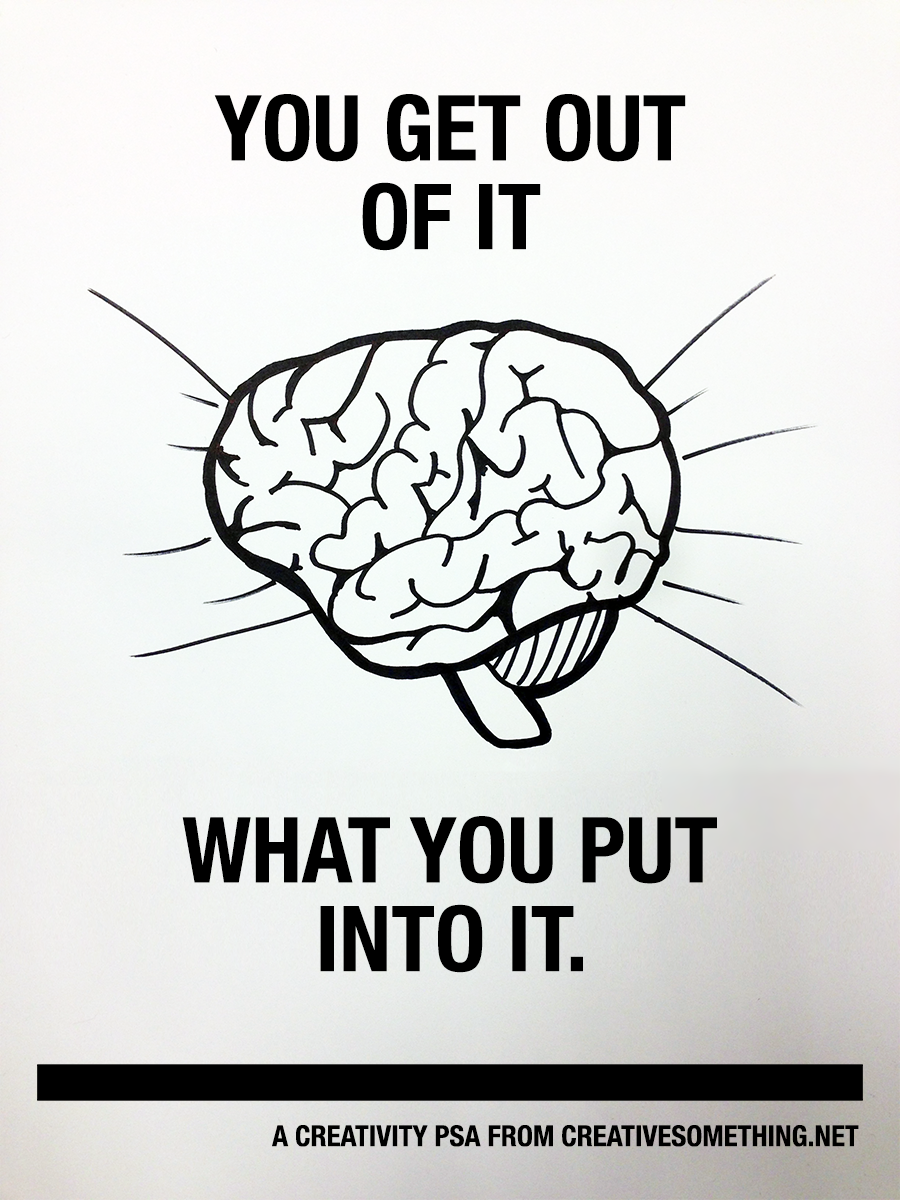 |
| Read more, write better. |
Remember also that you are being judged for your writing skills. How you write says a lot about you as a thinker. Do you skip steps in logic? Do you fail to address contradicting points of view? Do you ignore your reader, or disrespect him/her by obscuring your meaning with inflated structure? Good writing could literally mean the difference between getting the job or not, winning a grant/fellowship/spot on the board, or winning the girl/guy. I get asked all the time: what's the best and quickest way to become a better writer? And I respond:
"READ."
I have been a writing tutor now nearly four years, working with students both undergrad and graduate, both native English-speaking and otherwise, and I have found that there are a number of very common misunderstandings about written expression. Many students after my sessions have asked for a business card. As I am employed through the college, and have little outside time, I don't have such a trinket. I do, however, have this forum where I can maybe try to compile and address a few of these standards and why they are worth following.
I will start with the beginning of any writing assignment:
Pre-Writing
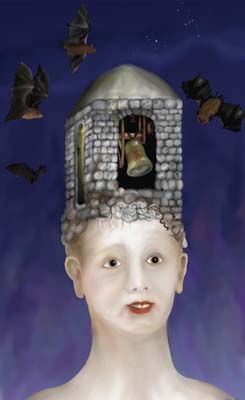 A misnomer. It involves writing too. Our heads contain an impressive sandstorm of thoughts, ideas, intuition, distractions, and embedded cultural norms as well as leftover primal patterns. When we are concentrating on a particular subject, the thought filaments are flying around like bats out of hell, and the only way to pin them down is to drag them out and slap 'em on paper. They suddenly appear before us in all their simple glory, isolated from the clusterfuck that is our brain.
Once we look at an idea, several more pop up in us. Drag 'em out, pin 'em down. Look at the two ideas you've just written. How are they related? Does one support the other? Is it a more specific part of the first idea? Does it refute the first thought?
There are dozens of ways to organize a brainstorm session. I find myself organizing differently based on the ideas, the assignment, whatever. Some topics are going to be more complex than others, and I say the more complex the ideas, the simpler your outline should be. I have found the following outline structures to be helpful in different situations:
1. Traditional hierarchical outline:
-->
OUTLINE TITLE
Introduction
I
The first sub-topic
n A. First supporting information for the
sub-topic
n B. Second supporting information for the
sub-topic
n C. Second supporting information for the
sub-topic
II The second
sub-topic
n A. First supporting information for the
sub-topic
n B. Second supporting information for the
sub-topic
n C. Second supporting information for the
sub-topic
III The third
sub-topic
n A. First supporting information for the
sub-topic
n B. Second supporting information for the
sub-topic
n C. Second supporting information for the
sub-topic
IV The fourth
sub-topic
n A. First supporting information for the
sub-topic
n B. Second supporting information for the
sub-topic
n C. Second supporting information for the
sub-topic
V The fifth
sub-topic
n A. First supporting information for the
sub-topic
n B. Second supporting information for the
sub-topic
n C. Second supporting information for the
sub-topic
conclusion:
Type
conclusion notes on this page.
Checklist For Writing an Outline
Organization
The introduction states the main topic or idea of the outline.
Each paragraph in your paper has a sub-topic.
Each sub-topic describes the main idea for a paragraph.
Supporting information and details for a sub-topic are listed under the
sub-topic
Each piece of supporting information is listed separately.
When supporting information is listed under a sub-topic, there are at
least two pieces of information in the list. If there is only one piece of
information to support a sub-topic, the information is inlcuded in the
sub-topic.
The conclusion summarizes the main idea of the outline.
(Note that this outline contains more sections than the old 5-Paragraph Essay you learned in middle/high school. When you get to college you can remove the training wheels.)
The advantages to this form of outline is that you remember to order the more general ideas first and the specific aspects of those ideas second:

2. Flow chart
---> Can be used for tracking multiple possible outcomes of your ideas. For example, if we assume the green light at Daisy's property in The Great Gatsby represents money, then we could assume that by staring obsessively at it, Gatsby's desire for her is linked to his desire for money. However, if we assume it is the green of youth, naivete and carelessness, then perhaps his desire for her is linked to his desire for youth. By examining each of the possibilities, boom--you have multiple subtopics to address and examine in your paper, filling up not only space in the paper you were supposed to hand in yesterday, but also demonstrating thoroughness of thought.
3. Venn Diagram (good for a comparative essay, good for the visually-oriented)


You want your outline to be easily read--by YOU! So however you can read and then re-decipher your thoughts when you return to the outline is up to you. Most professors never ask to see this (unless you're in an academic writing class), so you can even use pictures if you think that way.
If you know you have trouble thinking and writing at the same time, consider finding a friend or visiting your friendly Writing Center for a tutor to help you with this. Remember that if you do consult a tutor, they are helping you do your work, not doing it for you. You are the expert on your subject because you've been taking the class. Bring all your materials from class, a copy of the assignment sheet, and a positive attitude.
This stage in writing is very important, because you are able to interact messily with your ideas as they form together, instead of trying to do this simultaneously in full, complete, grammatically correct sentences. Even if you are adept with writing assignments, this strategy will allow you to appraise the organization and logical flow of your ideas before you begin brilliantly cataloging them in sentence form.
Happy outlining! :)
Thursday, March 28, 2013


Monday, March 4, 2013
From my Boss: Giving a Good Literary Reading
It may be a cheapshot brown-nose move, but my boss Dan Gutstein has some very "malevolent" remarks on the art of standing and reading in front of people. Note in particular the conversion chart referring to duration.
BLOOD AND GUTSTEIN: BE A PROFESSIONAL & COME OUT SWINGING: SOME TIPS O...: Be prepared to read wherever your travels may take you, even from a smartphone, if necessary. Blurriness optional. I reckon th...
BLOOD AND GUTSTEIN: BE A PROFESSIONAL & COME OUT SWINGING: SOME TIPS O...: Be prepared to read wherever your travels may take you, even from a smartphone, if necessary. Blurriness optional. I reckon th...
1. BE A PROFESSIONAL. I just love a
reader who slinks to the microphone without having selected what he intends to
read. He thumbs through a couple books, mutters like a bum, and holds the
audience responsible for his predicament. Never mind the reader who arrives an
hour late, and must be fed the Big Boy Platter, first, before he can step to
the microphone and thumb dumbly through his material. Can you prepare in
advance? Yes, you can, Hot Pants, you can apply stickies, if necessary, to your
pages, you can be on time, and you can be truly Dependable.
2. COME OUT SWINGING. That’s a double entendre meant
to channel the spirit of a boxer, for one, but mostly the spirit of a jazz musician. Be loud. Chase the
nerves. If you let the nerves chase you, then your voice will shrink and shrink
until it cracks, a sound not unlike a person falling through thin, thin ice
into a cold, cold lake. Need to warm up first? Why not sing? I endorse a song,
so long as it’s unpretentious, so long as you’re not pretending to be Mr. Five
By Five, since, you know, there was only one Mr. Five By Five,
and his name was Jimmy Rushing.
...
8. QUIT ALL THE
SELF-DEPRECATING COMMENTARY WHILST ONSTAGE. I
just love a writer who interrupts his readings to apologize
for the inadequacies of his presentation. He hardly means it, of course. To the
contrary, he’s trying to win sympathy from those assembled, and he’s shameless
in pursuing such a tack. When he offers—“That giant sucking sound going south
isn’t NAFTA, nope, it’s the sound of this reading”—he’s issuing a declaration
which compels the audience, in his estimation, to reply, “Come one, man, no,
you’re great!” Cut it out!
9. YOU CAN BE TIGHT
BUT NOT BLIND. It doesn’t make
you tough to empty a fifth of Jack Daniels at the podium, but prepares you,
instead, for a series of slurred syllables and awkward
stumbles, as your body attempts to reconcile your inebriation with the
centripetal forces of the Earth. A drink before the reading can help steady the
nerves, of course, and there’s nothing wrong with that, but to be “blind” is to
invite embarrassment, Hot Pants, not only upon you, but upon the people who
invited you to read. Hey: moderation ain’t just a role in
a dispute.
Sunday, February 24, 2013


Subscribe to:
Posts (Atom)